
Overcoming fear and anxiety in the outdoors
How to Overcome Fear and Anxiety While Hiking or Exploring Outdoors
As someone who has spent countless hours alone in the wilderness, I can confirm that being out in the wild can be scary. The thoughts of something going wrong can creep up on you like an elephant at a zoo.
In this piece, I'm going to break down how I've overcome my fear and anxiety of being alone in the outdoors, which has led to some of the most incredible experiences I've ever had. From the depths of the remote Maine Wilderness to paragliding off a mountain top, fear has met me at the trailhead. But, how I've managed to conquer that fear is not how you would expect. Let's get into it.
Context
Growing up, my favorite TV show was Bear Grylls' Ultimate Survivor. I made sure to tune in every week to see his adventures around the world in the most remote places on earth. I was always amazed at the incredible landscapes that he found himself in and how he managed to be out there all alone with nothing but the clothes on his back (and a full support crew, I would later find out, to shatter my childhood wonder). Endlessly inspired, I hoped that someday I would be able to experience these wild places as well.
Not only that, but the adventure of getting out alive and back to civilization was something I would role-play on every camping trip my family went on. But there was always a part of me that just wanted to stay out there. I loved the peace that the wilderness brought. A place where all my eight-year-old worries and concerns would melt into the trees. Fast forward to being an independent human being, and I was off on every adventure I could handle. Most of the time, this was with friends or family, but that call to go into the wild alone was something that still tugged at me.
Execution
My first big solo adventure came in the form of a van road trip across America. Now I know what you're thinking, this isn't getting out into the wilderness. And you would be correct. But going out alone into the western plains of the US felt just as daunting as getting into the back country in New Hampshire. Normally, the first days of a road trip are filled with excitement and anticipation. Mine was not. I was filled with anxiety, uncertainty, and fear. Every mile away from home, I questioned whether I should turn back, and the thoughts of "What am I doing? What if I break down in the middle of nowhere with no phone service? What if someone tries to rob me?" did not shut up in my head. It's not easy to admit being scared, especially as someone who presents themselves as loving adventure, and especially as a man. I understand that others may have it much tougher, but the truth is, until you've done it, everyone, no matter what gender, race, or ethnicity, will experience some form of anxiety. The fear of the unknown is something that is a universal human experience. This is something we all share, even if people claim or seem like they don't. The van trip turned out great, and I'm so happy that I didn't turn around during those first few days. Like most adventures, it was transformational, but it took pushing through the first wall to get there.
My first real solo wilderness experience was my first solo backcountry hike in the Catskill Mountains of upstate New York. I decided to do The Devil’s Path, a notoriously difficult 26-mile hike that would take me two days to complete and include 10,000ft+ of elevation gain, and a night alone in the woods. Since this was a point-to-point hike, I had to park at the end of the trail and hire a taxi to take me to the start. From the moment I left my van and the taxi pulled up, the creeping sense of fear started to raise its head. Despite the drivers being friendly and inviting, asking me all about my hiking experience and sharing stories of his own, the tension was building with every mile he drove further from my vehicle. All I could think was, "Wow, I have to walk all this way back now, alone, by myself?"
He dropped me off at the trail head, pulled away, and for the first time (maybe ever), I was alone in the wild with not a soul in sight. The silence was deafening, and I could hear my heart beating through my chest, holding the weight of my brand-new hiking pack.
Still in early spring, I set off into the chilly and fittingly eerie woods. From doing my research, I knew that there were bears in the area. I didn't know how many, or where they'd be, or when, but once again, the fear of the unknown is what sang like a choir. To be honest, every stick crack and squirrel scared the shit out of me, but I continued to walk. What other choice did I have? I put myself in this situation, and it was up to me to get out. I finally got to play Bear Grylls for real. But he didn't talk about this part, or at least my eight-year-old brain didn’t pay attention to the mental side of it.
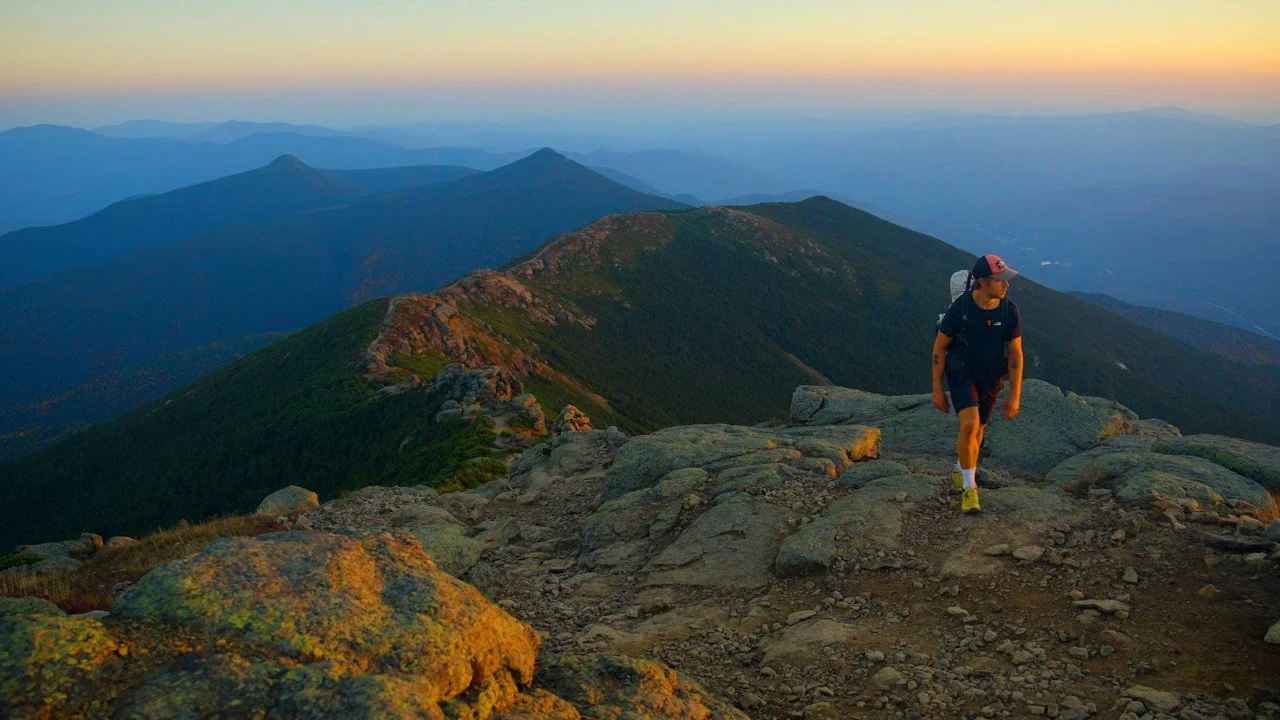
Then I reached the summit of the first peak and looked down over the edge. One wrong step, one twisted ankle, and I would truly be in some serious trouble. I'd been on cliff edges before, and in remote places, but I always had someone with me. And at least in the van, I had AAA or other cars passing by at the very least. But now, it was all on me. At first, that was a terrifying thought, but over time, that feeling of self-reliance and full responsibility is one of the main reasons I continue to pursue such adventures. It's rare that we find this feeling in modern-day life.
As much as modern conveniences are great, we've built a world in which we've stripped away the wild. But our souls still crave that sense of freedom and grand scale of nature. There's something about being alone in the wild, being out in the middle of nowhere, that makes us feel alive. Some people travel to the ends of the earth to find that feeling. For some, it’s an escape, for others, it’s the only place they can truly feel like themselves.
The importance of fear and anxiety.
Let's get this clear - Fear and Anxiety are there for a reason. The goal is not to become fearless. These feelings have evolved for a very specific reason, and that is to keep us safe. Without them, we would all be Alex Honnold free soloing up El Cap in Yosemite. The problem is, 99.999% of us don't have the same technical rock climbing skills as Alex Honnold, and so naturally, we would die if we tried something like this. But our good friend fear says, "Hey, maybe don't climb a 3000 ft cliff face without any ropes and the skill necessary to do it." Thanks, fear, that looked really cool, and I also want to do that, but you just saved my life.
Obviously, this is an exaggeration, but fear and anxiety are constantly checking in with us on our adventures so that we make smart decisions and not die. The problem arises when we let these voices grab the megaphone and dictate our entire lives. I'm all for staying safe, but at the same time, I know that all profit derives from risk. At some point, we need to take the leap of faith into the unknown, knowing we have done everything in our power to mitigate as much risk as we can.
What we need to understand is that our dialogue with fear is a relationship. It's a give and take. We need to learn to trust it, and it needs to learn to trust us. But how?
Overcoming
So, how did I overcome this fear and anxiety on my adventures?
Long story short, I didn't. It's still there, it still lives inside of me, but I've learnt to quiet it down and put it at ease when I need to. I've learnt to build a relationship with it. And that starts with awareness and knowing you are in control of your own mind.
Know that the first time you do something, it will always include a good amount of fear and anxiety, but like anything, the more you do it, the more experience and confidence you will build.
Some extra things that help calm the nerves in the outdoors:
Satellite phone - If you're going alone into the back country, or even if you're not alone, a satellite phone is always a good idea to have with you in a worst-case scenario. Luckily, I've never had to use mine, and hopefully I never will, but it always gives me that extra piece of mind.
Proper preparation - Knowing where you're going, studying that land, checking the weather, and knowing what tools you need for a certain activity you are doing are all key factors in mitigating risk and keeping yourself safe. Do your research before you arrive, and you should be all good!
Choosing the right places to be "alone" - If you're terrified of being alone in the wild but you crave that experience, then maybe jumping headfirst into the deep dark woods of Maine isn't the best bet for you. You need to start small and build your way up to wherever you want to be. There are still plenty of places you can go to feel alone and secluded, even though you are within walking distance of some houses or a highway.
Education - Taking classes in useful skills is never a bad idea. There are things like wilderness first aid, self-rescue, and climbing and rigging classes that will give you that extra sense of security when navigating in the outdoors.
Mindset
The last thing I want to talk about is mindset. If you want to, you can do this. The only thing holding you back is you telling yourself you can't. There are people far less capable than you who have done what you want to do. In any realm. If you're feeling extra unsure, know that your fear and anxiety will keep you safe and make you prepare properly. It's usually the people who don't prepare, who don't feel any fear, and don't take the wilderness seriously, that put themselves in danger. These are the ones that get lost, injured, or killed. Use fear as a friend. Sometimes he'll have your back, sometimes you can say thank you, but I've got this.
Moral of the story
Do it scared. It's only by doing it more and gaining experience that you begin to build that confidence to go in again. And like any skill, the more you do it, the better you get, the more comfortable you can start to feel, and slowly, that voice in your head starts to calm down. It’s still there, but now, it can trust you, and you can trust it.
The rewards are worth it, and the sense of freedom out there is unmatched.